When your teenager is angry at you for no reason
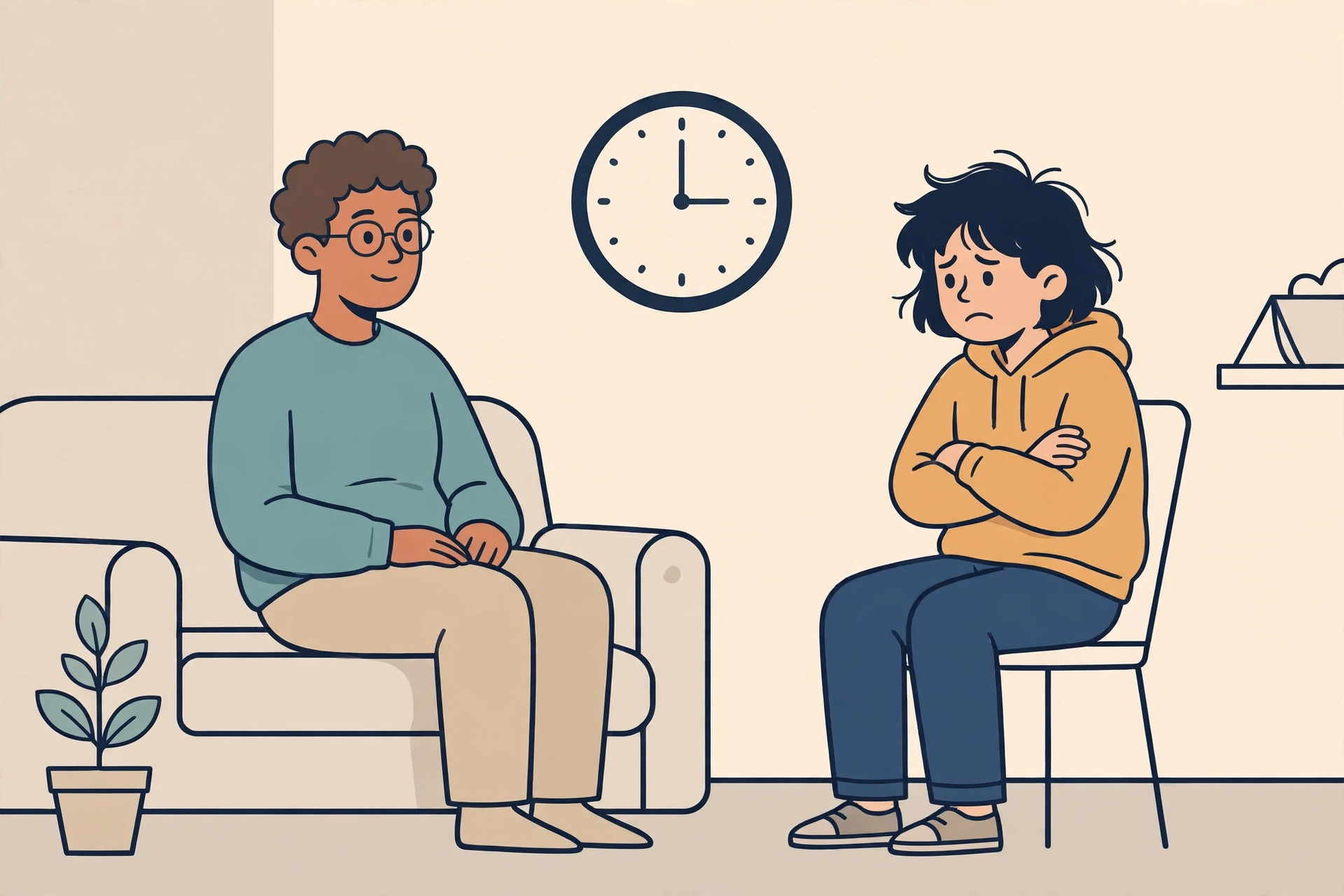
You tell your teenager they can't go to the movies with friends because the family is already driving out of town for Thanksgiving dinner — and get an outburst that makes no sense no matter how you phrase it. There was no rule broken, no defiance to correct, nothing to "enforce." Just anger, aimed at you, about a situation nobody caused. Most parenting advice covers defiance: how to hold a boundary, how to de-escalate a power struggle. This is the other case, and it's far more common: irrational anger that needs outlasting, not winning.
It's not about you (usually)
Teen anger is often triggered by a sense of not being in control — a constant condition for someone maturing fast while still tied by parental constraints. The Thanksgiving-dinner meltdown isn't about the movies; it's about discovering, again, that your schedule isn't yours. The trigger looks senseless because the feeling is about powerlessness and the target is whoever's closest. Accepting that teenagers will sometimes be furious about things that don't make sense — and that no phrasing would have prevented it — is the first step. You didn't cause it, and you can't argue it away.
The safe-person mechanism: why YOU get the worst of it
Here's the reframe that changes everything: teenagers express their frustration on the people they feel safest with. They hold it together at school, with friends, with coaches — and unload at home, on you. The people who get the worst of teen anger are the people the teen trusts most not to leave. That doesn't make the outburst pleasant. But it does mean the anger is, paradoxically, evidence of a secure relationship — and it means your response in the moment is teaching, because they're watching how the safest person they know handles being yelled at.
The in-the-moment script: outlasting the storm
When there's no misbehavior to correct — just weather — run this sequence:
- Pause and regulate yourself first. Lower your voice, slow your words. If you're furious, hostile, or accusatory, you model the opposite of what they need to learn. It's fine to name it: "I'm getting heated too — I need a minute."
- Don't take the bait of the content. The argument will try to become about the movies, the fairness, your tone. It's about none of those. Respond to the feeling, not the topic: "You're really frustrated about this."
- Offer space with a return time. "We're both heated. I'm going to give us 30 minutes, then we'll talk." Agreeing on when you'll come back keeps the pause from feeling like abandonment or stonewalling.
- Don't force the resolution. Forcing a calm conversation while either of you is still flooded just magnifies the intensity. The goal of the moment is no damage, not a lesson.
- Stay level about the plan. When everyone's calm, a brief, practical note lands better than any lecture: "I know it's frustrating. Planning ahead helps us fit more in — want to look at next weekend together?"
What success looks like: the outburst ends without anyone saying something that needs apologizing for, you both reconvene within the hour, and the practical planning note gets heard. You won't get gratitude. You'll get a teenager who storms off, cools down, and comes back — which is the skill being built.
Defiance vs. discharge: the decision rule
Not every angry moment is the same. Before responding, sort it:
- Defiance (refusing a rule, testing a boundary): engage — state the concern about one specific action, agree on a next step, follow through. Calm, specific communication keeps it about the action, not a judgment of who they are.
- Discharge (anger at a situation, no rule broken): outlast — regulate yourself, offer space, return later. There is nothing to correct, so don't manufacture a lesson.
Mixing them up is the classic error: treating discharge like defiance (punishing a feeling) or treating defiance like discharge (letting a boundary dissolve because they yelled). Name which one you're looking at before you open your mouth.
What NOT to say (the damage phrases)
In the discharge case, these do lasting harm: "You're overreacting," "After everything I do for you," "Stop being so dramatic" — and the silent version, matching their volume. What helps: "That sounds frustrating." "I'm here when you're ready to talk." Boring, calm, repeatable. That's the point.
The calm-later repair
Once everyone's regulated — hours later, not minutes — a short repair conversation builds the connection the outburst threatened:
- Lead with empathy, not a recap: "Tough afternoon, huh?"
- Ask, don't tell: "What was the hardest part of that?" Teens who articulate the feeling themselves learn to name it next time.
- Apologize for your part if you have one: "I raised my voice too — sorry about that." Modeling repair teaches more than modeling perfection.
- Keep it short. The repair is a bridge, not a second trial.
Between storms, invest in the buffer: regular one-on-one time — a weekly outing, a daily check-in without distractions — gives the relationship reserves to draw on. Don't force deep conversations; the goal is positive contact, not interrogation.
When anger crosses a line
Learn the difference between anger and aggression. If your teen is verbally abusive, destroys property, or physically hurts you — or if you're frightened — that's beyond parenting strategy: put safety first, disengage, and seek professional help. Intense, persistent anger can be a symptom of underlying issues that need a counselor or clinician, not a script. Getting help is not a parenting failure; it's the right escalation for the right problem.
FAQ
Does staying calm mean being permissive? No. Calm and permissive are different things. Clear, respectful boundaries create safety; yelling creates compliance at best.